“`html
Best EV charger for Enid home: 2026 picks for older panels
⏱️ 8 min read · Last updated: 2026
Finding the best EV charger for Enid home use in 2026 comes down to one thing: what your electrical panel can actually handle. Many Enid homes, especially older builds, still run on 100-amp service with limited spare capacity. That means a 48-amp charger on paper might not be the best EV charger for Enid home use in reality. Instead, an adjustable amperage Level 2 charger—like ChargePoint Home Flex or Wallbox Pulsar Plus—usually makes more sense because it can dial the output down to match what your home can safely support.
- ChargePoint Home Flex typically supports 16 to 50 amps and usually costs about $549 to $699.
- Wallbox Pulsar Plus typically supports up to 40 amps in the U.S. and commonly runs about $699 to $899.
- Tesla Wall Connector supports up to 48 amps and commonly lands around $475 to $620 before installation.
- Most Level 2 home charger installs take about 2 to 6 hours when the panel is nearby, but longer if trenching or a subpanel is needed.
- Installed cost in Enid commonly lands in the $900 to $2,200 range depending on distance to the panel, breaker space, and garage wiring.
Those key facts set the stage, but finding the right match starts with understanding why adjustable amperage matters so much in older Enid panels.
Which Level 2 EV charger is best for a home in Enid with an older panel?
The best Level 2 EV charger for a home in Enid with an older panel is an adjustable amperage model, not a fixed high-output unit. ChargePoint Home Flex (16–50 amps) and Wallbox Pulsar Plus (up to 40 amps) both let an electrician set the output to match the panel instead of overloading it.
That matters in older Enid homes where the service may already be committed to a furnace, electric range, or large air conditioner. If the charger supports adjustable amperage, the installer can often set it to 16, 24, 32, or 40 amps and keep the project simple and safe. In plain English: if your panel cannot handle 48 amps, you do not have to abandon Level 2 charging. You can dial the charger down and keep the install legal and far cheaper.
For older Enid panels, the best EV charger is often the one that can run at 32 amps today and scale later, not the one that demands a full service upgrade on day one.
Once your panel capacity is clear, the next question is what the full project will cost.
What does the best EV charger for Enid home cost in 2026?

The charger itself usually runs $475 to $899, while the total installed price in Enid commonly lands between $900 and $2,200 depending on distance to the panel, breaker space, and whether the garage needs new conduit. A straightforward install on an attached garage tends to fall on the low end, whereas a detached garage or a panel with no spare capacity pushes the number up fast.
For a local buyer, the charger price is only part of the equation. A less expensive unit that forces a service upgrade can make the total project pricier than a better adjustable model. That is why the true comparison is installed cost, not box price.
| Model | Typical amperage options | Typical 2026 price range | Best fit in Enid |
|---|---|---|---|
| ChargePoint Home Flex | 16 to 50 amps | $549 to $699 | Older panels, mixed vehicle households |
| Wallbox Pulsar Plus | Up to 40 amps | $699 to $899 | Compact garages, flexible output needs |
| Tesla Wall Connector | Up to 48 amps | $475 to $620 | Tesla-only homes with stronger electrical capacity |
For a deeper local breakdown, the numbers on level 2 EV charger installation cost Enid OK are more useful than national averages because trenching, garage layout, and panel age change the bill more than the brand name does.
Price is one factor, but Enid’s weather and garage layout can shift which charger works best day to day.
Why do Enid garages and winter weather change the pick?
Enid’s winter temperatures are cold enough to slow EV charging, but not so extreme that you need a special “winter charger.” The battery cares more than the wall unit does. A charger rated for outdoor use will usually handle the weather; the car may simply charge more slowly until the battery warms up.
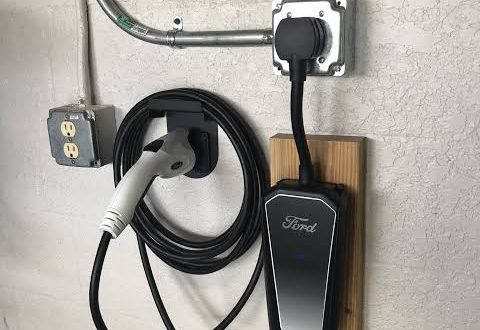
In an unheated garage, you want sealed connections, outdoor-rated equipment if any part is exposed, and a cable that stays flexible enough to use in the cold. The cable path also matters—in older Enid homes, good chargers can underperform if the outlet was placed too low, the cord has a tight bend, or the electrician had to route around an awkward wall bay. That is why a local electrician should walk the garage before recommending a model. If the charger is not behaving the way it should after installation, the fix is often wiring or settings, not the brand itself. For that, the practical next stop is EV charger not working troubleshooting Enid.
With weather and layout covered, the choice narrows to two brands.
Is ChargePoint or Wallbox better for an Enid garage install?

ChargePoint Home Flex is usually the better pick for maximum flexibility, while Wallbox Pulsar Plus is often the better pick for a smaller garage or a cleaner wall footprint. For an Enid garage install, ChargePoint makes more sense when the panel is older, and Wallbox makes more sense when the space is tight.
The practical difference: ChargePoint Home Flex reaches 50 amps in many setups, while Wallbox Pulsar Plus tops out at 40 amps in the U.S. That extra ceiling matters only if your panel can support it. If it cannot, the smaller charger is the better buy.
ChargePoint is also the safer answer for households that may change vehicles later. Wallbox feels cleaner and more compact, which helps in narrow Enid garages where storage shelves already eat wall space. Tesla Wall Connector deserves a mention too—if you drive only Tesla vehicles and your panel has room, it is usually the simplest and most affordable option.
If the panel is old and the garage is tight, ChargePoint Home Flex is the most forgiving choice; if wall space is the constraint, Wallbox Pulsar Plus is the cleaner fit.
Choosing the right charger is only half the equation; the other half is finding a qualified installer.
How do you vet a charger installer in Enid?
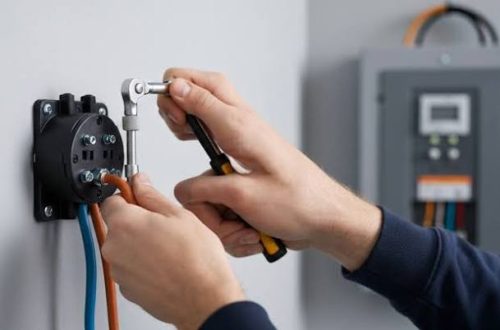
A good Enid electrician should talk about load calculation, permit needs, breaker space, and garage routing before they mention charger brands. If the first conversation centers only on which model to buy, that is a weak sign.
You want someone who can explain whether your home needs a dedicated circuit, a subpanel, or an amperage reduction. You also want a clear answer on permit handling, since charger installs in many areas require permits and inspection. For details specific to your area, review the local permit requirements at charger permit enid before signing anything.
Questions worth asking before you hire
- What amperage setting do you recommend for my panel?
- Will you complete the permit and inspection process?
- How far is the panel from the garage, in feet?
- What happens if the load calculation comes back tight?
Avoiding costly mistakes starts with knowing what to watch for.
What mistakes cost money later?
The biggest mistake is choosing a charger before the electrical plan. The second biggest mistake is assuming a 48-amp unit will charge dramatically faster in daily life than a 32-amp unit. For most commuters, the difference is not worth a panel upgrade.
People also underestimate cord management and outlet placement. Those details are not glamorous, but they decide whether the charger feels easy or frustrating every single day.
Three red flags in a quote
- The quote does not mention load calculation.
- The installer refuses to discuss amperage rating.
- The installer wants to skip permits to save time.
The cheapest charger quote is often the one that hides the panel upgrade, and the most expensive quote is often the one that tells you the truth up front.
With those pitfalls covered, here are the most common questions from Enid homeowners.
Common questions about best EV charger for Enid home
What is the best home EV charger for cold Oklahoma winters?
The best choice is a charger rated for outdoor use with a flexible cable and a proper installation, not a special “winter model.” ChargePoint Home Flex and Wallbox Pulsar Plus both work well in cold weather, but the car battery will still charge more slowly when temperatures drop.
How do I choose an EV charger for my Enid garage step by step?
Start with a load calculation, then measure the distance from panel to garage, then choose an amperage rating your panel can support. After that, pick the charger body that fits your vehicle and wall space. In older homes, that sequence saves the most money.
Tesla vs ChargePoint vs Wallbox — which is best for an older home?
ChargePoint Home Flex is usually the best all-around answer for an older home because it offers the widest amperage flexibility. Wallbox Pulsar Plus is strong when garage space is tight. Tesla Wall Connector is best when the home is Tesla-only and the panel has enough capacity.
Why is my EV charger charging slowly in cold weather?
Cold weather slows the battery, not just the charger. The charger can be working perfectly while the vehicle limits charging speed to protect the pack. If the charger is outdoors, also check for long cable runs, weak connections, and any error lights or breaker trips.
How much do the top home EV chargers cost in 2026?
In 2026, ChargePoint Home Flex commonly runs about $549 to $699, Wallbox Pulsar Plus about $699 to $899, and Tesla Wall Connector about $475 to $620. Installed cost in Enid often ends up higher, usually because of wiring distance, breaker work, or permit requirements.
Can I get same-day EV charger installation in Enid?
Sometimes, but only if the panel has space, the garage is easy to reach, and the permit path is simple. A same-day job is far more realistic for a straightforward replacement or a short run than for a detached garage or an older panel that needs upgrades.
- For most Enid homes, the best EV charger is an adjustable amperage charger, not the highest-output model.
- ChargePoint Home Flex is the safest all-around choice for older panels; Wallbox Pulsar Plus is better in tight garages.
- Installed cost in Enid commonly ranges from about $900 to $2,200, depending on wiring and panel work.
- A load calculation matters more than brand choice when the home has an older electrical system.
The Bottom Line
The best EV charger for Enid home use in 2026 is the one your panel can support without forcing a bigger electrical project than you need. For many homes, that means ChargePoint Home Flex or Wallbox Pulsar Plus set to a realistic amperage—not a maxed-out charger that looks impressive on paper.
Pick one thing and try it this week: get a load calculation before you buy a charger. Then compare the real installed cost against the panel you already have. For the local cost and permit picture, start with the main EV Charger Installation in Enid, OK: Level 2 Cost, Permits & Which Charger Fits Your Home page and work from there.
See also: EV charger installation Enid OK
See also: EV charger not working troubleshooting Enid
See also: EV charger permit Enid OK
Related: commercial EV charging station Enid business
Related: EV charger tax credit rebate Oklahoma
Related: NEMA 14-50 outlet installation Enid
“`
See also: EV charger installation Enid OK
See also: EV charger not working troubleshooting Enid
See also: EV charger permit Enid OK