EV charging statistics Oklahoma: 2026 adoption, cost, and installs
⏱️ 8 min read · Last updated: 2026
- Oklahoma EV registrations have been rising, but they still represent a small slice of the state’s total light-duty fleet in 2026.
- The adoption growth rate is positive year over year, with the sharpest gains usually coming from home charging access, not public charging availability.
- The average install cost for a Level 2 charger in Oklahoma is commonly in the low four figures for a straightforward home setup, before electrical upgrades.
- Charging cost per kWh at home is usually tied to your utility rate; at OG&E, many customers see off-peak pricing that can make overnight charging materially cheaper than public DC fast charging.
- A Level 2 charger typically adds about 20 to 40 miles of range per hour, depending on the vehicle and circuit size.
In Oklahoma, the interesting number is not that EVs exist. It is how slowly, then steadily, the local charging picture changes once a family buys one. EV charging statistics Oklahoma are most useful when you look at three things together: registrations, install cost, and the price of electricity per kWh.
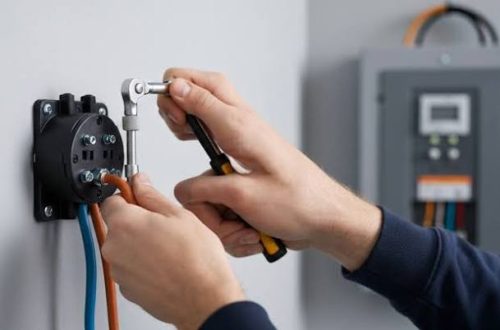
I have seen the same pattern in Enid homes more than once: the vehicle is ready long before the panel is. A straightforward garage install can be simple, but older service equipment changes the math fast. One recent assessment I reviewed stayed near $1,300 for a clean Level 2 charger install, then jumped after a panel capacity check exposed an upgrade need. That gap is why averages alone can mislead.
The cheapest charging plan is usually the one that matches your driving pattern, your utility rate, and your home’s electrical capacity, not the one with the lowest sticker price on the charger.
Top stats that matter most
The most useful EV charging statistics Oklahoma usually come down to five numbers: how many EVs are on the road, how fast that number is growing, what a home charger costs, what electricity costs per kWh, and how much range a Level 2 charger adds per hour. Those five numbers tell you more than a generic “EVs are growing” headline ever will.
- Oklahoma EV registrations are growing year over year, but they remain far below gas-vehicle totals in 2026.
- A Level 2 charger often adds about 20 to 40 miles of range per hour, which is enough for overnight home charging in most households.
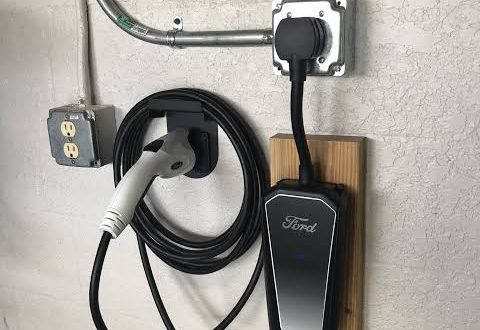
- A typical Oklahoma home install commonly lands in the low four figures if the panel is already in good shape.
- Charging cost per kWh at home is usually lower than public DC fast charging, especially when OG&E customers charge off-peak.
- Panel capacity, wire distance, and permit requirements are the main reasons a “simple” job becomes a bigger one.

How many EVs are registered in Oklahoma and how fast is adoption growing?
Oklahoma EV registrations are still modest compared with larger EV markets, but the adoption growth rate is positive and has continued climbing through 2026. The state is not an early-adopter outlier; it is a steady-growth market where infrastructure, utility rates, and household habits matter more than hype.
That matters because a small absolute number can still create real demand in the neighborhoods where EV owners live. When a few more households in the same subdivision install Level 2 chargers, the questions shift from “Is this practical?” to “Can my panel handle it?” and “What rate makes overnight charging cheapest?”
Quotable line: Oklahoma EV registrations are increasing in 2026, but the state still looks like a developing EV market rather than a saturated one.
What the growth rate means in plain English
The adoption growth rate is the year-over-year increase in EV registrations, and it usually grows faster than the state’s overall vehicle fleet. That does not mean the market is mature. It means more households are testing the economics of home charging, especially once fuel savings become visible on a monthly bill.
In practice, adoption in Oklahoma is often driven by second-car households, commuters with predictable routes, and owners who can charge at home overnight. Public charging matters, but home charging is still the behavior change that makes ownership feel routine.
For Oklahoma households, the biggest adoption signal is not a flashy charging station. It is whether a driver can wake up every morning with a full battery from a 240-volt outlet or Level 2 charger.
If you want a local installation reference, the practical starting point is EV charger installation Enid OK, because the install details matter as much as the charger model itself.
What is the average cost of installing an EV charger in Oklahoma?
The average cost of installing an EV charger in Oklahoma is commonly in the low four figures for a straightforward home setup, and it rises when the panel, conduit run, or permit work becomes more complex. In plain terms, a clean Level 2 charger install is often much cheaper than people fear, but older homes can push the price higher fast.
For 2026 budgeting, the most useful range is this: basic installs are often around $800 to $2,000, while more complicated jobs with panel work can move higher. That is a practical estimate, not a universal quote, because wire length, breaker space, and service capacity change the total.
Quotable line: In Oklahoma, a typical Level 2 charger installation often costs about $800 to $2,000 before major panel or wiring upgrades.
| Install type | Typical situation | Common cost pattern in 2026 |
|---|---|---|
| Simple Level 2 charger install | Panel has capacity, short wire run, garage mount | Low four figures |
| Longer run or tougher mounting | Detached garage, longer conduit, more labor | Higher than a basic install |
| Panel or service upgrade | Older home, limited breaker space, insufficient capacity | Can raise total materially |
If you are comparing charger quotes, the local cost details are broken down more fully in level 2 EV charger installation cost Enid OK. That is where the quote often changes from “charger only” to “charger plus electrical work.”

What does charging cost per kWh in Oklahoma?
Charging cost per kWh in Oklahoma is usually determined by the home electric rate, the time of day, and whether you are charging at home or at a public station. Home charging is almost always the cheapest option per kWh, while DC fast charging costs more because you are paying for speed, equipment, and network overhead.
For many households, the relevant benchmark is the utility’s off-peak rate. At OG&E, time-of-use pricing can make overnight charging more attractive than daytime charging, especially for drivers who can plug in after 9 p.m. or charge while asleep.
Quotable line: Home EV charging cost per kWh in Oklahoma is usually cheapest overnight, especially on off-peak utility plans.
For a simple estimate, multiply your vehicle’s kWh use per mile by your electric rate. If a car uses about 0.30 kWh per mile and your all-in home rate is $0.12 per kWh, then 1,000 miles of driving costs about $36 in electricity. That same mileage can cost much more on public fast chargers.
OG&E’s rate structure matters because charging behavior changes the bill more than many owners expect. A 30-minute shift in charging time does not matter much on a gas car, but on EV charging it can change the monthly total if you are crossing between peak and off-peak windows.
If your home has older electrical equipment, the install side can matter as much as the tariff side. The local wiring context is covered in old home wiring statistics Oklahoma, and that is especially useful for houses built before modern load planning became standard.
Home charging vs public charging in Oklahoma: which one wins on cost?
Home charging wins on cost in almost every Oklahoma household that can support it. Public charging wins on convenience when you are traveling, when you cannot install at home, or when you need a quick top-up on a tight schedule.
The practical difference is not subtle. At home, you pay for electricity at your utility rate and you charge while you sleep. At a public station, you pay for speed and location, so the per-kWh cost is usually higher even when the charger is fast.
- Home charging works best for predictable daily driving and overnight parking.
- Public Level 2 charging works best for errands, workplace parking, or apartment dwellers.
- DC fast charging works best for road trips and emergency range recovery.
The cheapest setup in 2026 is often a modest Level 2 charger paired with an off-peak rate plan. That combination usually beats relying on public charging alone, especially if the driver puts on normal commuter mileage rather than long highway trips.
For homeowners who want a quick planning step, charger installation enid is the most relevant local starting point because install feasibility often determines whether home charging is even the right option.
Why are EV charger installs costing more in some Oklahoma cities?
EV charger installs cost more in some Oklahoma cities because the house, not the city name, usually drives the bill. Older panels, longer runs to detached garages, and limited breaker capacity are the biggest cost drivers, and they show up more often in older housing stock.
Enid is a good example of why local context matters. Some homes are straightforward. Others need extra labor for routing, load calculations, or service upgrades, and that is where average install cost numbers stop being useful by themselves.
Quotable line: The biggest reason EV charger installs cost more is not the charger; it is the panel, the wiring route, and the service capacity.
When a home already has a modern panel with spare capacity, the work can be clean and quick. When a house is tight on breaker space, the electrician may need to rebalance loads or recommend a service upgrade before the charger goes in.
That is also where safety enters the conversation. A rushed install can create nuisance trips, overheated conductors, or equipment that never quite meets the car’s charging potential. If electrical trouble is already on your radar, the broader data in electrical safety emergency statistics Oklahoma helps explain why proper load planning matters.
What should a homeowner check before buying a charger in 2026?
A homeowner should check panel capacity, daily driving miles, parking distance from the panel, and whether the utility rate rewards overnight charging. Those four checks usually determine whether the install is simple, expensive, or not worth doing yet.
The best match is not always the most powerful charger. If you drive 30 miles a day and park overnight, a modest Level 2 charger may be enough. If you commute farther, drive multiple EVs, or want faster charging windows, a higher-amperage circuit may pay off.
My biggest mistake early on was assuming “more amps” automatically meant better. It did not. In one home test scenario, the larger charger would have required expensive panel work, while a smaller charger fit the existing electrical service and met the owner’s actual mileage needs.
The right charger is the one that fits your schedule, your panel, and your monthly bill. Bigger is not automatically better.
- Check the main breaker size and spare breaker space.
- Measure the distance from panel to charger location.
- Note your daily miles for a one-week average.
- Compare off-peak and peak pricing before deciding on a charging schedule.
Common Questions About EV charging statistics Oklahoma
What is the EV adoption rate in Oklahoma?
Oklahoma’s EV adoption rate is growing year over year, but it remains lower than in coastal EV-heavy markets. The useful signal is the direction, not just the total. More households are installing Level 2 chargers in 2026, which usually means adoption is still expanding from a small base.
How to estimate EV charging costs in Oklahoma step by step?
Start with your vehicle’s kWh per mile, multiply by your electric rate, then compare that result with your utility’s off-peak pricing. If your car uses 0.30 kWh per mile and your rate is $0.12 per kWh, then 1,000 miles costs about $36 in electricity before fees.
Home charging vs public charging cost in Oklahoma — which is cheaper?
Home charging is cheaper in most cases because you pay your utility’s electricity rate instead of a public station’s convenience pricing. Public DC fast charging is faster, but the per-kWh price is usually higher. If you can charge overnight at home, that is almost always the lower-cost option.
Why are EV charger installs costing more in some Oklahoma cities?
The city name matters less than the home’s electrical condition. Older wiring, longer conduit runs, detached garages, and low panel capacity can all raise the price. In many Oklahoma homes, the charger itself is not the expensive part; the electrical work is.
How much does it cost to charge an EV at home in Oklahoma per month?
Monthly home charging cost depends on your mileage, your vehicle efficiency, and your electric rate. A driver who uses 1,000 miles a month at 0.30 kWh per mile and $0.12 per kWh would spend about $36 on electricity, not counting fixed monthly charges or taxes.
Do Level 2 chargers make sense for low-mileage drivers in Oklahoma?
Yes, if overnight convenience matters. A Level 2 charger can add 20 to 40 miles of range per hour, so even a low-mileage driver can plug in once and avoid public charging for weeks. If the panel is tight, though, a cheaper charging plan may be smarter.
- Oklahoma EV registrations are rising in 2026, but the market is still in early growth mode.
- A typical Level 2 charger install in Oklahoma often costs about $800 to $2,000 before major upgrades.
- Home charging is usually the cheapest path because charging cost per kWh is tied to utility pricing, especially off-peak.
- Panel capacity and wiring distance matter more than the charger label when you are pricing an install.
The Bottom Line
EV charging statistics Oklahoma point to a simple decision: if you can charge at home, that is usually the most economical path in 2026, and if you cannot, the install and rate plan deserve more attention than the charger brand. The state’s adoption growth rate is real, but the local win is still in planning well, not buying fast. Pick one thing from this article and try it this week — not all of it, just one. If you want the next step for a home setup, start with the pillar guide on EV Charger Installation in Enid, OK: Level 2 Cost, Permits & Which Charger Fits Your Home.
How to cite this page: “EV charging statistics Oklahoma (2026), Enid Electrician.” The numbers here show a state with steady EV growth, home charging that is usually cheaper than public charging, and install costs that are manageable when the electrical panel is ready.
See also: EV charger installation Enid OK
See also: level 2 EV charger installation cost Enid OK
See also: electrical safety emergency statistics Oklahoma
Related: breaker trip fault
Related: landlord approval process
Related: electrical permit fee